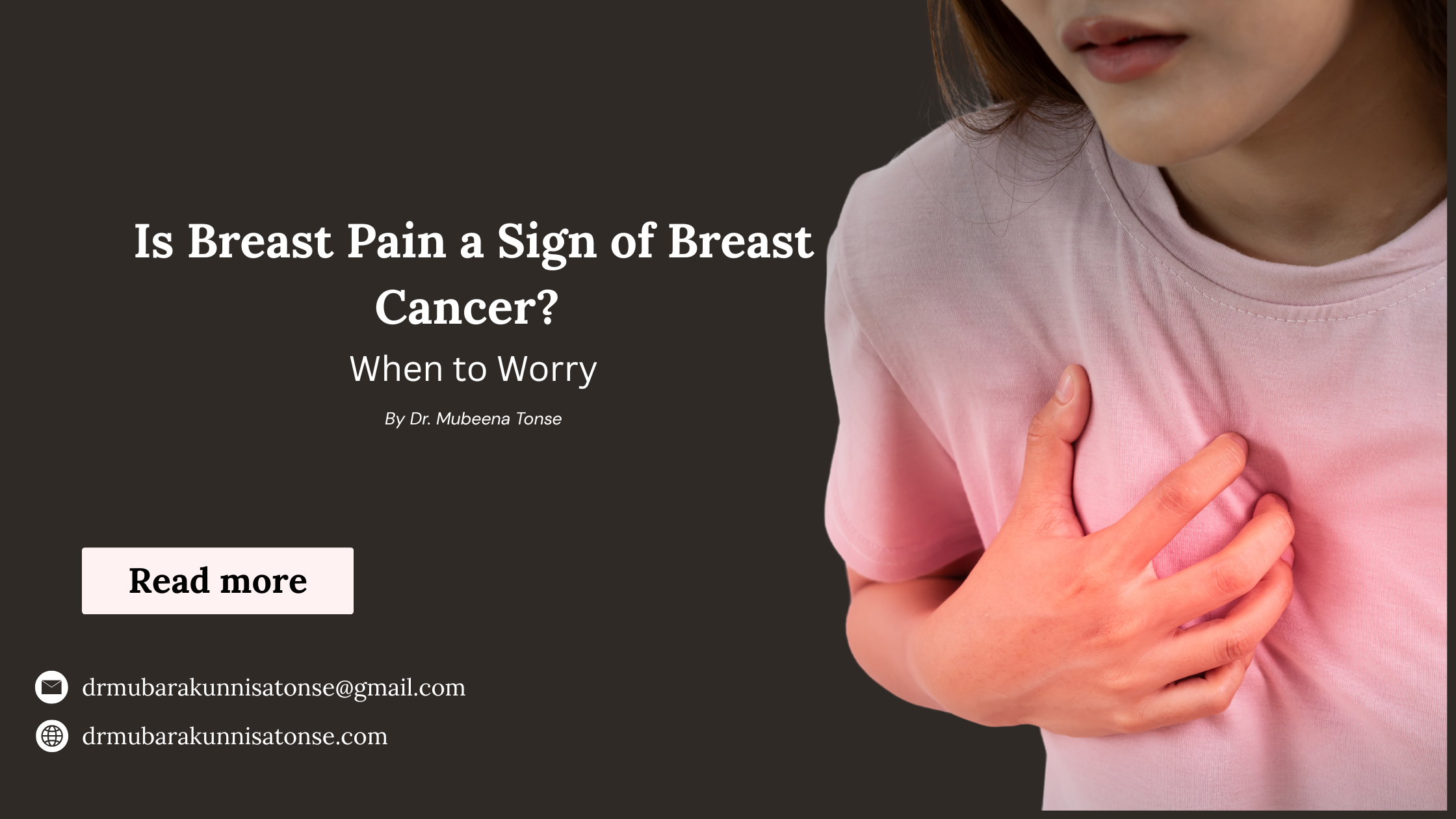
Breast pain is a common concern that many women experience at some point in their lives. For many, the first worry that comes to mind is breast cancer. The reassuring truth is that breast pain is rarely a symptom of breast cancer. In most cases, it is linked to hormonal changes, lifestyle factors, or benign breast conditions. Still, understanding when breast pain requires medical attention is important for early detection and peace of mind.
Understanding Breast Pain
Breast pain, medically known as mastalgia, can affect women of all ages. It may feel like tenderness, burning, heaviness, or a sharp discomfort in one or both breasts. Breast pain is generally classified into two types:
Cyclical breast pain:
This type is related to the menstrual cycle and usually occurs before a period. Hormonal fluctuations, especially changes in estrogen and progesterone levels, can make breast tissue more sensitive and swollen.
Non-cyclical breast pain:
This type is not linked to the menstrual cycle. It may occur due to muscle strain, cysts, breast injury, or even ill-fitting bras.
In many cases, breast pain improves on its own and does not indicate a serious condition.
Can Breast Pain Be a Symptom of Breast Cancer?
While breast cancer symptoms can vary, pain alone is rarely the first sign of breast cancer. Most breast cancers are painless in their early stages. However, it is still important to pay attention to any unusual changes in the breasts.
Breast pain that is accompanied by other symptoms may require further evaluation.
Warning Signs to Watch For
Consult a doctor if breast pain occurs along with any of the following symptoms:
-
A new lump in the breast or underarm
-
Changes in breast size or shape
-
Skin dimpling or redness
-
Nipple discharge, especially if bloody
-
Nipple inversion or pulling inward
-
Persistent pain in one specific area of the breast
These signs do not always indicate breast cancer, but they should always be assessed by a healthcare professional.
When Should You See a doctor?
It is advisable to seek medical advice if:
-
Breast pain persists for several weeks
-
The pain is localized to one area
-
It interferes with daily activities
-
It occurs after menopause
-
You notice any new breast changes
Doctors may recommend a clinical breast examination, mammogram, or breast ultrasound to determine the cause.
The Importance of Breast Awareness
Being familiar with how your breasts normally look and feel is one of the best ways to detect changes early. Regular breast self-awareness, routine breast cancer screening, and timely consultation with a doctor can significantly improve outcomes if any issue is detected.
Experiencing breast pain can be worrying, but in most cases, it is not related to breast cancer. Still, persistent or unusual breast pain should never be ignored. Paying attention to changes and seeking medical advice when needed plays a crucial role in early detection of breast cancer and maintaining breast health.
If you notice any concerning symptoms, consult for proper evaluation and guidance.