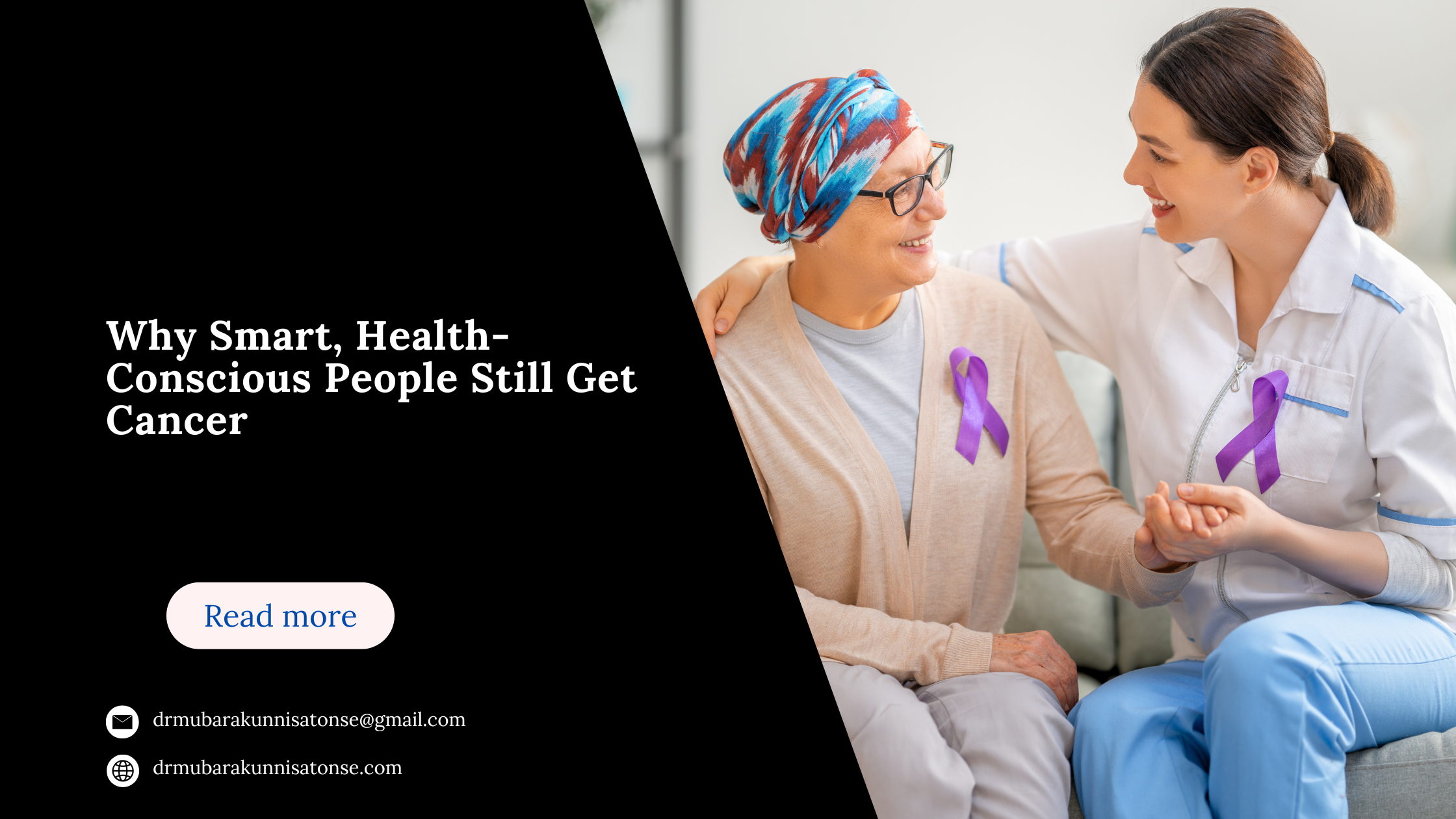
Many people believe cancer only affects those with unhealthy habits. So when a physically active, health-conscious person receives a cancer diagnosis, the reaction is often shock: “But they did everything right.”
The reality is more complex. While a healthy lifestyle can significantly reduce cancer risk, it cannot eliminate it completely. Understanding why cancer still occurs in healthy individuals is important for awareness, early detection, and prevention.
Cancer Risk Is More Than Lifestyle Alone
Healthy eating, exercise, avoiding smoking, and limiting alcohol all help lower the risk of cancer. However, cancer develops through a combination of factors including:
- Genetics
- Environmental exposure
- Aging
- Random cellular mutations
Even healthy cells can sometimes develop DNA errors during normal cell division. Over time, these abnormal cells may grow uncontrollably and form cancer.
This is why even people who appear “fit and healthy” can still develop diseases like breast cancer, lung cancer, colorectal cancer, or leukemia.
Environmental Factors Are Often Invisible
One of the biggest contributors to rising cancer cases today is environmental exposure. Many health-conscious individuals are still exposed to:
- Air pollution
- Secondhand smoke
- Industrial chemicals
- Pesticides
- Contaminated food or water
For example, lung cancer in non-smokers is increasing globally, especially in urban areas with high pollution levels. A person may maintain excellent lifestyle habits yet still face risks from their surroundings.
Genetics Can Increase Cancer Susceptibility
Some cancers are linked to inherited genetic mutations. A family history of cancer can increase the likelihood of developing certain cancers, even in individuals who maintain healthy routines.
However, genetics alone does not always determine outcomes. In many cases, lifestyle and early detection still play a major role in improving survival and reducing complications.
The Myth That “Healthy Means Safe”
One hidden danger of being health-conscious is assuming serious illness is unlikely. This mindset may cause people to:
- Ignore persistent symptoms
- Delay medical check-ups
- Skip cancer screenings
Symptoms such as unexplained fatigue, persistent cough, weight loss, or unusual bleeding should never be dismissed simply because someone leads a healthy lifestyle.
Why Early Detection Still Matters
A healthy lifestyle lowers risk, but regular screening and awareness remain essential. Tests such as mammograms, colonoscopies, Pap smears, and health check-ups can help identify cancer early, when treatment is often more effective.
The goal of healthy living is not to guarantee immunity from disease—it is to improve overall health, reduce risk, and increase the body’s ability to recover.
Cancer does not always follow expectations. Smart, health-conscious people can still develop cancer because the disease is influenced by genetics, environment, aging, and biological changes beyond lifestyle alone.
But awareness changes outcomes. Paying attention to symptoms, prioritizing screening, and seeking timely medical advice remain some of the most powerful tools in cancer prevention and early detection.