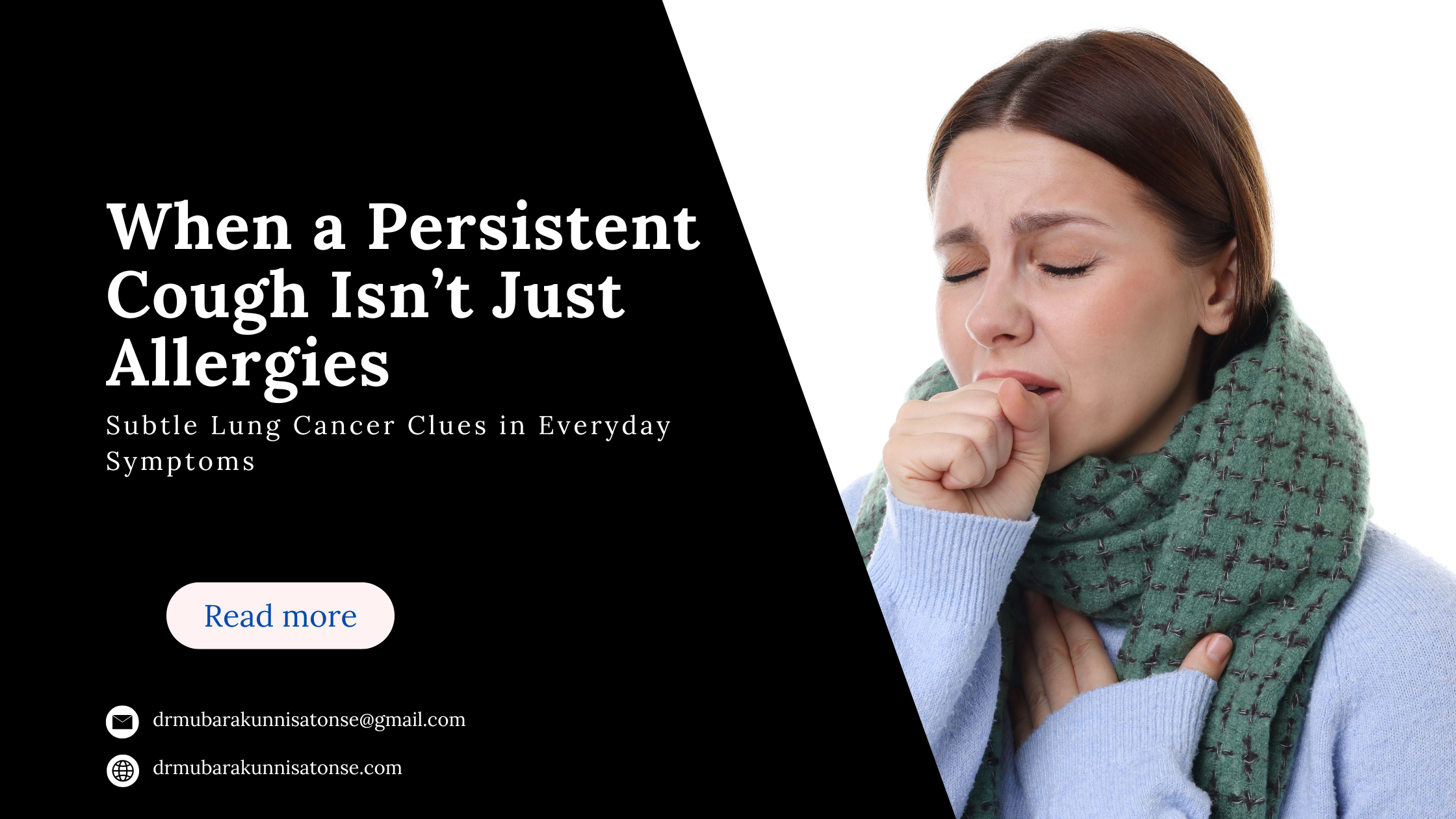
A persistent cough is often dismissed as a minor issue caused by allergies, pollution, or seasonal changes. However, when a cough does not go away or keeps returning, it may be more than just a simple irritation. In some cases, it can be an early warning sign of lung cancer—a condition where early detection can make a significant difference in outcomes.
Understanding a Persistent Cough
A cough that lasts for more than 2–3 weeks is considered persistent. While common causes include infections, asthma, or allergies, it is important not to ignore a cough that lingers despite medication or home remedies.
In countries like India, where air pollution levels are high, many people assume their symptoms are environment-related. This often leads to delayed diagnosis of serious conditions like lung cancer.
When Should You Be Concerned?
Not every cough indicates cancer, but certain patterns and associated symptoms should raise concern. You should consider medical evaluation if your cough:
- Persists for more than three weeks
- Becomes more severe over time
- Produces blood or rust-colored sputum
- Is accompanied by chest pain
- Causes shortness of breath or wheezing
- Occurs along with unexplained weight loss
- Is associated with constant fatigue
These symptoms may overlap with other respiratory conditions, but they should never be ignored.
Subtle Signs People Often Overlook
Lung cancer symptoms in early stages are often mild and easily mistaken for everyday health issues. Some subtle warning signs include:
- A slight but continuous change in your usual cough
- Frequent throat irritation or the need to clear your throat
- Recurrent chest infections that do not fully resolve
- Hoarseness or change in voice
- Reduced stamina during routine activities
Because these symptoms appear common, many individuals delay seeking medical advice, allowing the disease to progress.
Lung Cancer in Non-Smokers
While smoking is a major risk factor, lung cancer in non-smokers is increasing. Factors such as air pollution, secondhand smoke, occupational exposure, and genetic predisposition can also contribute.
This makes it even more important for non-smokers to stay alert to unusual respiratory symptoms rather than assuming they are harmless.
Importance of Early Detection
Early detection of lung cancer significantly improves treatment outcomes. Diagnostic tests such as chest X-rays, CT scans, and other evaluations can help identify abnormalities at an early stage.
If detected early, treatment options are more effective and less complex. Waiting too long can limit treatment possibilities and reduce survival rates.
When to See a Doctor
Consult a healthcare professional if:
- Your cough does not improve with standard treatment
- You notice any of the warning signs mentioned above
- You have a history of smoking or exposure to pollutants
- You experience recurring respiratory issues
Timely consultation can help rule out serious conditions or ensure early diagnosis if needed.
Final Thoughts
A persistent cough may seem harmless, but it can sometimes signal something more serious. Paying attention to subtle changes in your body is key to maintaining long-term health.
Do not ignore symptoms that persist or worsen over time. Awareness, early detection, and timely medical care play a crucial role in improving outcomes in lung cancer.