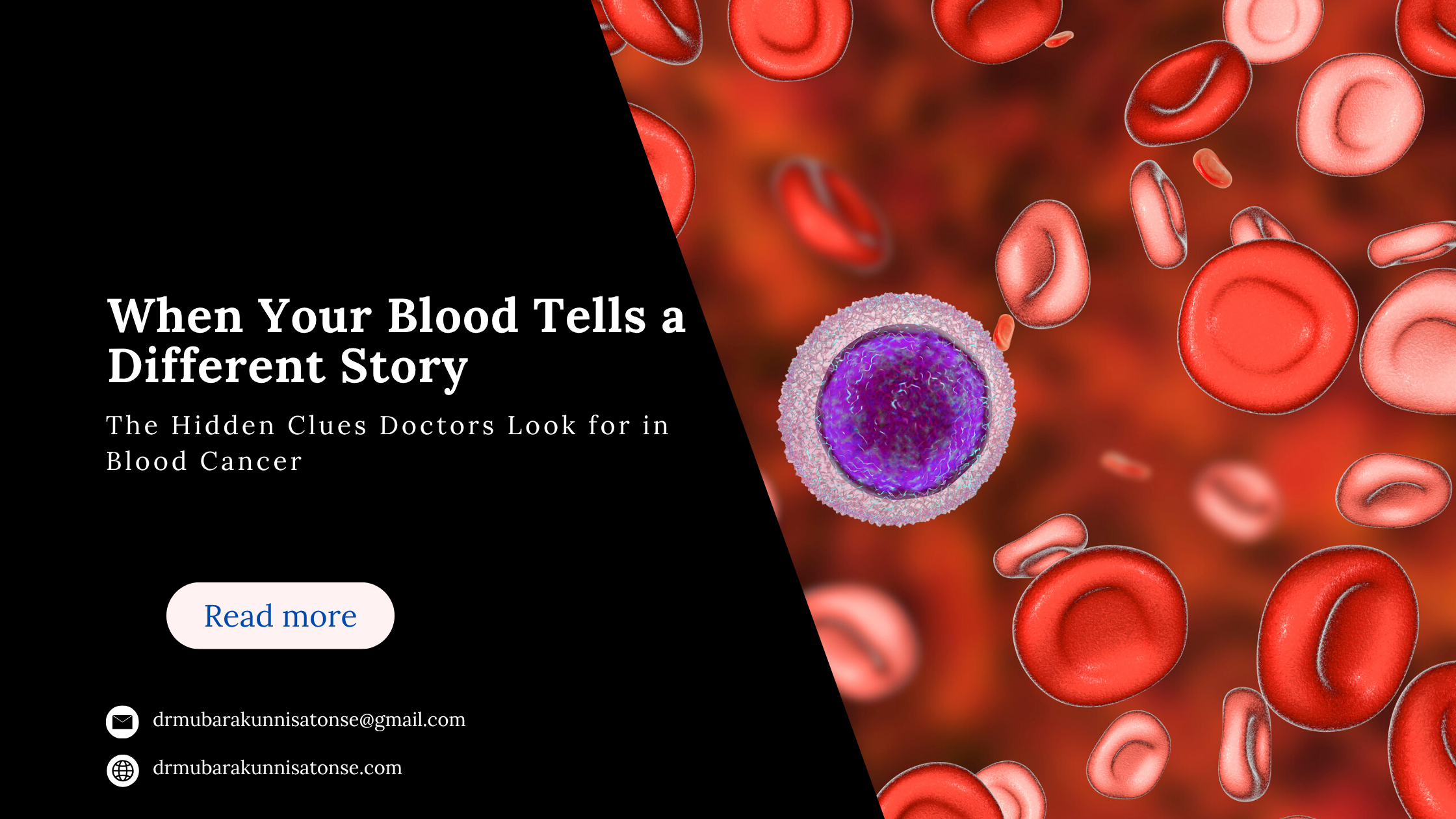
Understanding Leukemia
Leukemia is a type of blood cancer that begins in the bone marrow, the soft tissue inside bones where blood cells are made. Bone marrow works like a highly organized production center, creating:
-
Red blood cells (RBCs) to carry oxygen
-
White blood cells (WBCs) to fight infections
-
Platelets to help blood clot
When leukemia develops, this delicate production system is disrupted.
What Happens in the Bone Marrow?
In leukemia, the bone marrow starts producing abnormal white blood cells. These cells are immature and do not function properly. Instead of maturing and dying naturally, they multiply uncontrollably.
Over time, these abnormal cells crowd the bone marrow, leaving little space for healthy blood cell production. This is the root cause of most leukemia symptoms.
How Leukemia Affects the Blood
Because the bone marrow is overwhelmed, the levels of normal blood cells drop.
1. Low Red Blood Cells (Anemia)
When red blood cells decrease, the body receives less oxygen. This may cause:
-
Fatigue
-
Weakness
-
Dizziness
-
Shortness of breath
-
Pale skin
2. Reduced Healthy White Blood Cells
Although leukemia involves white blood cells, the abnormal ones cannot fight infection effectively. As a result, patients may experience:
-
Frequent infections
-
Fever
-
Slow recovery from illness
3. Low Platelets
A decrease in platelets affects clotting ability, leading to:
-
Easy bruising
-
Bleeding gums
-
Frequent nosebleeds
-
Prolonged bleeding from minor cuts
Effects Beyond the Bone Marrow
As leukemia cells increase, they may spread into the bloodstream and other organs such as:
-
Lymph nodes (causing swelling)
-
Spleen or liver (causing abdominal fullness)
-
Bones and joints (causing pain or tenderness)
These signs often prompt further medical evaluation.
Why Early Diagnosis Is Important
Leukemia can develop rapidly in some cases, while in others it progresses slowly. Early detection through:
-
Complete blood count (CBC)
-
Peripheral smear
-
Bone marrow biopsy
helps determine the type and stage of leukemia, guiding appropriate treatment.
With modern therapies including chemotherapy, targeted therapy, immunotherapy, and bone marrow transplantation, many patients achieve remission and long-term survival.
When to Consult a Doctor
If you experience persistent fatigue, frequent infections, unexplained bruising, or prolonged fever, it is important to seek medical evaluation. Early medical attention can significantly improve outcomes.