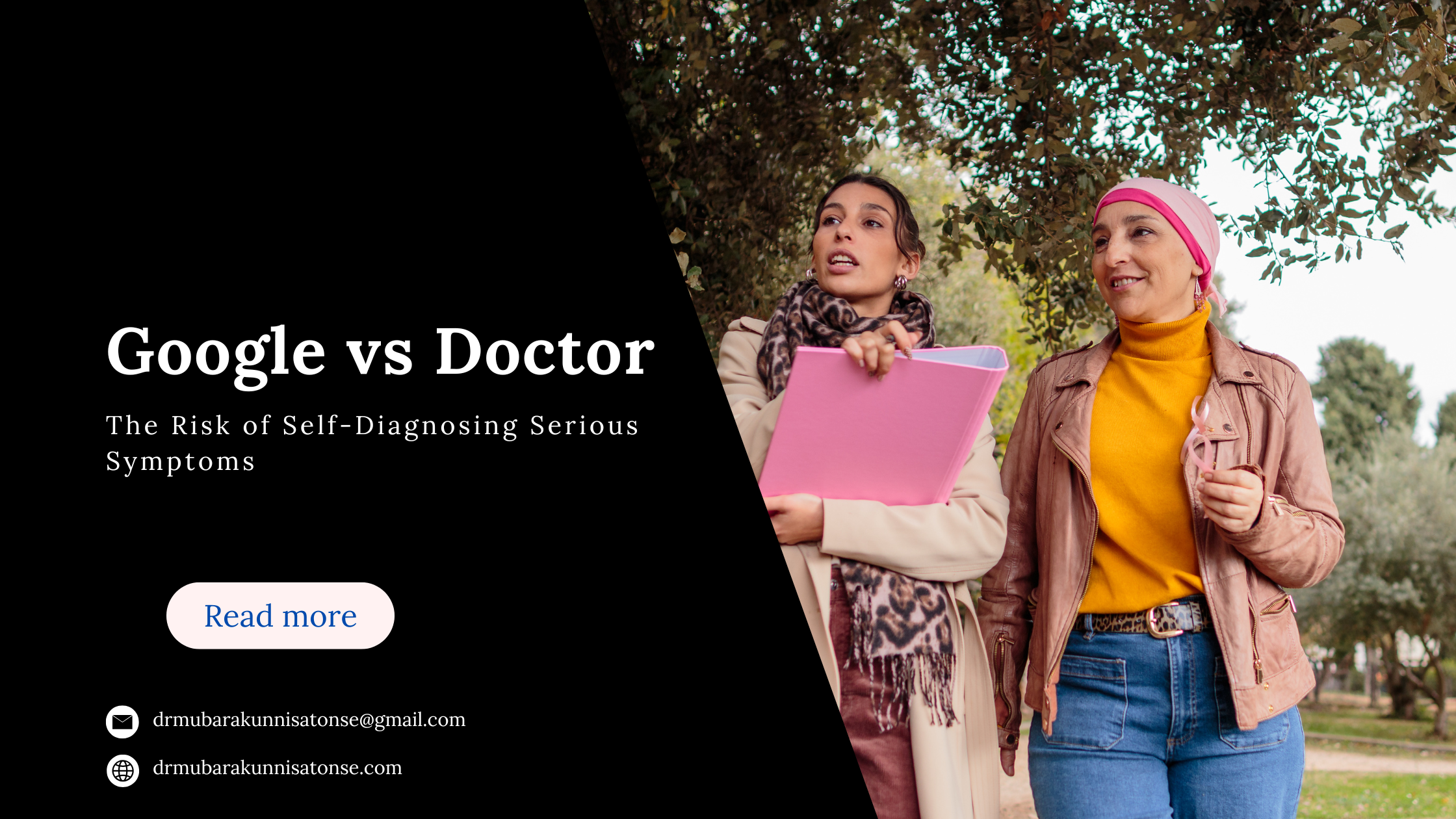
A quick search on Google and suddenly a mild symptom feels life-threatening. While the internet offers easy access to health information, self-diagnosing serious symptoms can do more harm than good. So, where should you draw the line between online research and professional medical advice?
The Rise of “Dr. Google”
With smartphones in every hand, people often turn to Google before consulting a doctor. Searching symptoms like persistent cough, unexplained weight loss, or fatigue can lead to a flood of information, often overwhelming and misleading. Not all sources are reliable, and many lack medical accuracy.
Why Self-Diagnosis Can Be Dangerous
Self-diagnosis can lead to:
- Unnecessary anxiety by assuming the worst
- Delayed diagnosis of serious conditions like cancer
- Incorrect self-treatment or ignoring symptoms
Relying solely on online information may cause people to either panic unnecessarily or, worse, ignore warning signs that need urgent attention.
Symptoms That Should Never Be Googled Away
Certain symptoms should always be evaluated by a doctor, including:
- Persistent pain or unexplained lumps
- Blood in stool or urine
- Sudden weight loss
- Unusual bleeding or discharge
- Long-lasting fatigue
These could be early signs of cancer or other serious illnesses, where timely medical intervention is crucial.
The Difference Between Information and Diagnosis
Google provides general information, not personalized medical advice. A doctor considers:
- Medical history
- Physical examination
- Diagnostic tests
This comprehensive approach ensures accurate diagnosis, something no search engine can replace.
When to Trust a Doctor Over Google
If symptoms persist, worsen, or feel unusual, it’s time to consult a healthcare professional. Early diagnosis can significantly improve outcomes, especially in conditions like cancer where early detection saves lives.