Waking up drenched in sweat can feel unsettling. While night sweats are often harmless, in some cases they may signal an underlying health issue, including cancer. So how do you know when it’s something to worry about?
What Are Night Sweats?
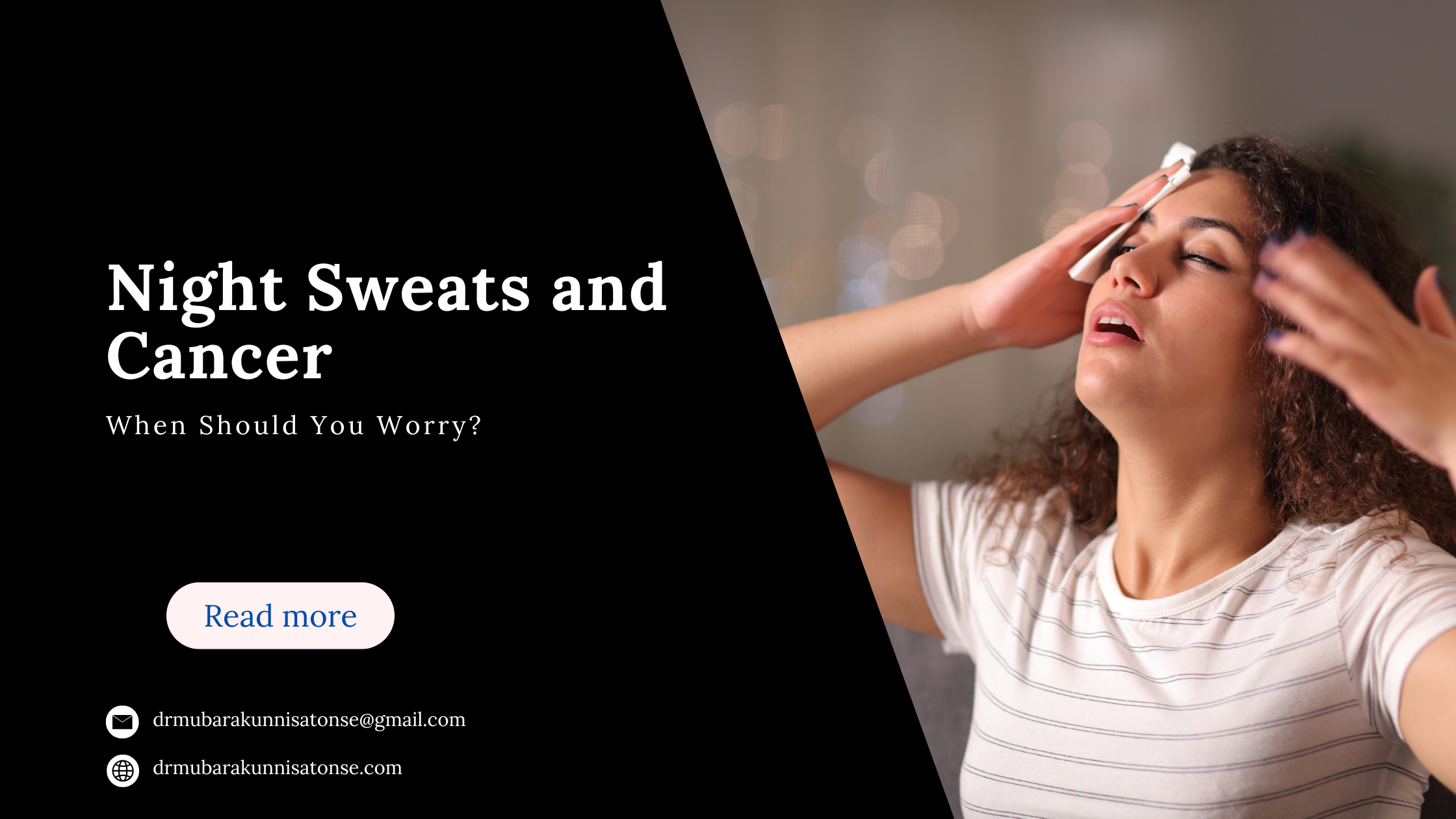
Night sweats refer to excessive sweating during sleep that soaks your clothes or bedding, even in a cool environment. Unlike mild sweating due to heat, these episodes are intense and may occur repeatedly, disrupting sleep and causing discomfort.
Common Causes of Night Sweats
Most night sweats are not related to cancer. Common causes include:
- Hormonal changes (especially in women)
- Infections such as tuberculosis
- Stress and anxiety
- Certain medications
Understanding these causes helps avoid unnecessary panic while identifying patterns that need attention.
Can Night Sweats Be a Sign of Cancer?
In some cases, yes. Night sweats are commonly associated with certain cancers, especially:
- Lymphoma (Hodgkin and Non-Hodgkin)
- Leukemia
Cancer-related night sweats are often described as severe, persistent, and drenching, and may occur along with other symptoms. They are usually not the only warning sign.
Warning Signs You Shouldn’t Ignore
Night sweats may need medical evaluation if they are accompanied by:
- Unexplained weight loss
- Persistent fever
- Extreme fatigue
- Swollen lymph nodes
- Loss of appetite
If you notice a combination of these symptoms, it’s important to consult a doctor for further evaluation.
When Should You See a Doctor?
You should seek medical advice if:
- Night sweats happen frequently and severely
- They persist for weeks without a clear cause
- They are associated with other unusual symptoms
Early consultation helps rule out serious conditions and ensures timely diagnosis if needed.